


Agriculture Classroom Supplies
Rock Wool Planting Cubes 1 Inch for Hydroponics, Great for Rooting Cuttings Cloning Plants Seed Germination (4 Sheets 20
Description
Key Benefits
High Porosity & Water-Holding Ability
The rock wool cubes for growing have a density that provides excellent moisture-retention and aeration properties. Due to the unique moisture gradient from top to base, your plants gain access to nutrient solutions and oxygen. Plus, the cubes drain excess water, ensuring just the right amount of moisture is retained for seed germination. This makes them perfect for delicate new growth.
Ideal for Hydroponics
Rock wool is well-suited for hydroponic growing as it holds moisture without breaking down throughout your growing cycle. It remains strong and efficiently retains water, making it ideal for use with hydroponic systems. Whether you're starting seeds, growing vegetative and fruiting crops, both short and long-term, these cubes can help your plants grow 30-50% faster than those in soil.
Higher Germination Rates & Crop Yields
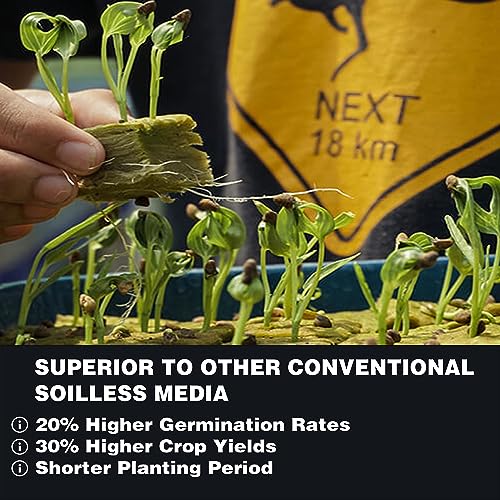
Studies have shown that rock wool seed starter outperforms conventional hydroponic seed starters. Plants seeded in rock wool achieve a 70% germination rate, compared to 50% for the other two hydroponic mediums. Furthermore, crops grown in agricultural rock wool have shown a 30% higher yield in shorter planting periods.
Proper Preparation
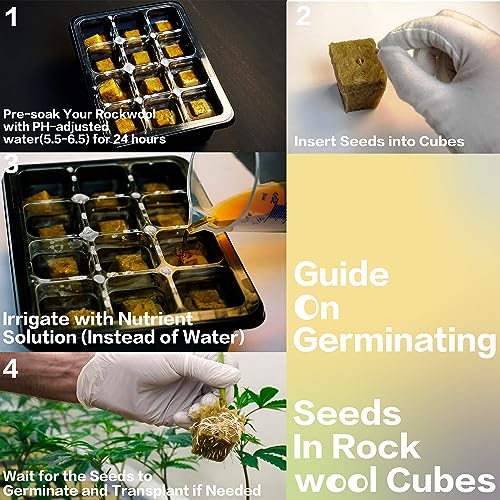
Before starting or transplanting plants into your grow plugs, it's crucial to wet the hydroponic rockwool cubes. Ideally, immerse them in a nutrient solution adjusted to a pH of 5.5-6.5 for 24 hours. This allows the nutrient solution to infiltrate all the tiny pores, preparing the medium for root colonization.
Easy Direct Seeding & Transplanting
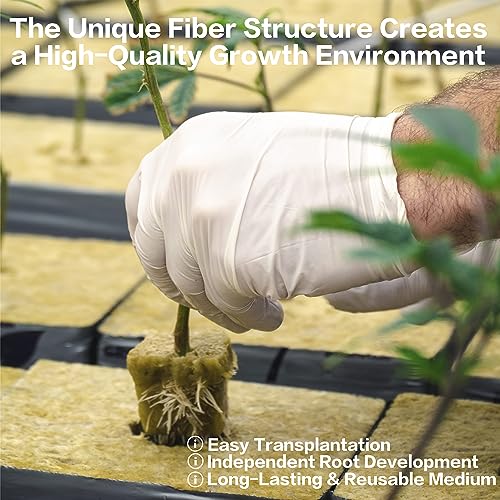
Rock wool cubes are versatile and can be used for direct seeding, propagating cuttings, or transplanting. Plants can spend their entire lives in the cubes or be transplanted into other hydroponic grow media or containers. The cubes can be directly transplanted, making the process less disruptive for the plant and allowing a quicker acclimation to a new home.
Temperature Control
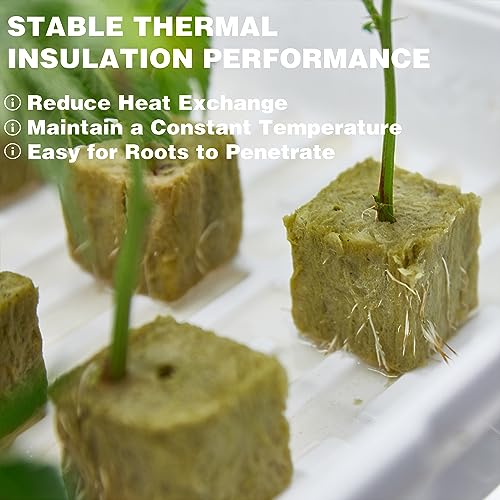
The special inorganic fiber structure of rock wool seed starter offers unique and stable thermal insulation, reducing heat exchange caused by temperature differences. This helps maintain a constant planting environment, making temperature control easier in indoor hydroponics. Creating a microclimate, especially beneficial during cold winter months, is highly advantageous.


